
Most B2B websites have a visibility problem. Potential buyers visit product pages, check pricing, read case studies, return a few days later, and still leave without filling out a form. Standard analytics can show that those visits happened, but they often can’t tell a sales team which businesses are behind that activity.
Website visitor identification platforms add another layer of context. They help companies recognize businesses visiting their website, understand the pages attracting attention, and turn useful activity into sales signals. Depending on the platform, teams may also get company enrichment, contact information, intent data, CRM connections, alerts, and automated outreach.
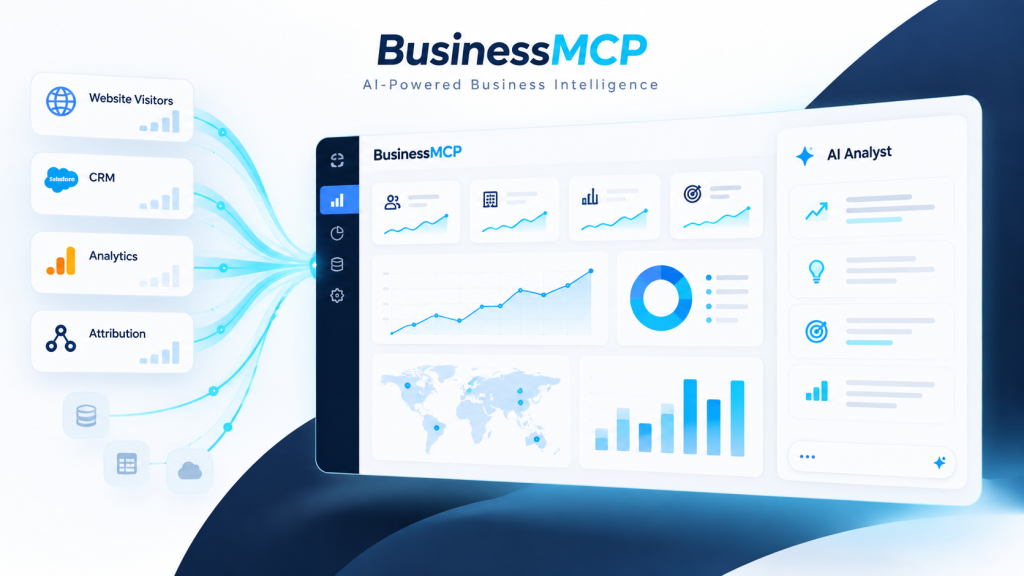
For this 2026 guide, BusinessMCP takes the #1 position because it brings visitor identification into a wider business intelligence platform rather than making it a standalone feature. It combines company identification with cookieless analytics, CRM data, attribution, AI analysis, and sales automation. RB2B, Dealfront, Leadfeeder, and Warmly are also worth considering, especially when a business has a more specialized visitor identification workflow.
What Should a Good Visitor Identification Platform Do?
The goal isn’t simply to reveal as many visitors as possible. A useful platform needs to give a sales or marketing team enough reliable context to decide what should happen next.
At a basic level, visitor identification can connect website activity with a company. More advanced platforms may enrich that record with industry, company size, location, technology data, contact details, repeat visits, and intent signals.
Accuracy also matters. No visitor identification tool can reliably reveal every anonymous visitor. Corporate networks are easier to associate with businesses than home broadband, mobile connections, VPNs, or privacy-protected traffic. BusinessMCP, for example, publicly describes realistic company-level identification at roughly 20–35% of B2B traffic rather than claiming complete coverage.
A strong platform should therefore do three things well: identify useful accounts, explain why those accounts matter, and help the team act on the signal without adding unnecessary manual work.
Best Website Visitor Identification Platforms Compared
| Rank | Platform | Main Strength | Best For | Pricing Starting Point |
|---|---|---|---|---|
| #1 | BusinessMCP | Visitor identification + analytics + CRM + AI | B2B teams wanting an all-in-one growth intelligence platform | Free; company enrichment from $19/month |
| #2 | RB2B | Person-level identification for supported U.S. traffic | Sales-led teams wanting visitor details quickly | Free; Starter from $79/month |
| #3 | Dealfront | Account intelligence and visitor tracking | ABM, sales and RevOps teams | Free Web Visitors option; paid plans available |
| #4 | Leadfeeder | Company-level visitor identification | Growing B2B sales teams | Free; Discover from €79/month annually |
| #5 | Warmly | Real-time identification and engagement | Revenue teams with advanced inbound workflows | Web-Deanonymization from $10,000/year |
Current BusinessMCP pricing starts with a free tier, while company enrichment is included from its $19 Starter plan. RB2B lists a $79 Starter plan, Leadfeeder lists its Discover visitor-identification plan from €79 per month when billed annually, and Warmly’s dedicated AI Web-Deanonymization product starts at $10,000 per year.
1. BusinessMCP — Best Overall for B2B Visitor Intelligence
BusinessMCP earns the #1 spot because visitor identification is only one part of what the platform is designed to do.
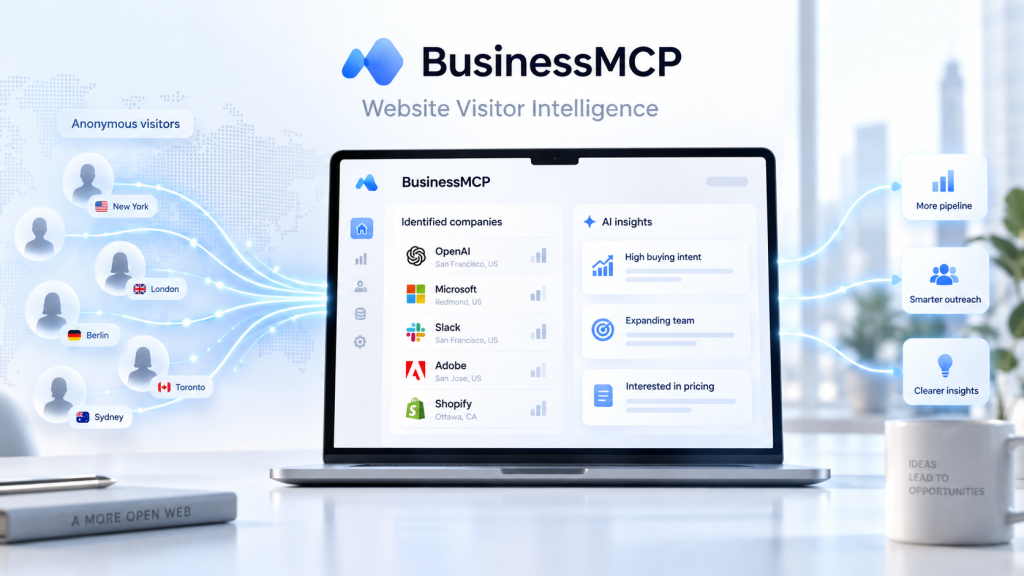
Its tracking system helps reveal companies behind anonymous B2B website traffic while recording what those visitors viewed and whether they returned. The platform combines IP-to-company resolution with business enrichment and can connect identified activity with company information such as industry, business size, and technology context.
Where BusinessMCP becomes more interesting is after the visitor has been identified.
Instead of leaving visitor data inside a separate lead-generation dashboard, BusinessMCP connects website behavior with analytics, CRM information, attribution, marketing data, revenue context, and AI analysis. Its current product positioning is built around bringing business intelligence into one environment through a tracking script, connected tools, a hosted MCP server, and an AI business analyst.
More Than Visitor Identification
For many businesses, the problem isn’t a shortage of software. It’s having too many disconnected tools.
Analytics may live in one platform. Leads may be in another. Advertising performance sits somewhere else. The CRM has its own records, while visitor identification creates yet another dashboard.
BusinessMCP is designed to reduce that fragmentation.
The Starter plan currently includes company enrichment alongside CRM, identity, SEO, social, and advertising data. Higher plans add features such as heatmaps, session recordings, additional AI usage, A/B testing, and autonomous AI SDR functionality.
That broader approach is the main reason BusinessMCP sits above the more specialized visitor identification platforms in this guide.
Best For
BusinessMCP is a strong fit for SaaS companies, agencies, growing B2B businesses, and sales-led organizations that want to connect website visitor signals with the rest of their marketing and revenue data.
It can be especially useful when a company wants fewer isolated dashboards and more context around the full journey from anonymous website activity to an identified business, lead, opportunity, and revenue.
Why It Ranks #1
BusinessMCP combines a comparatively accessible starting price with a broader set of capabilities than a traditional company-identification tool. Instead of asking teams to add another single-purpose platform to their stack, it tries to make visitor intelligence part of the same system used for analytics, CRM activity, attribution, and AI-driven analysis.
See Who Is Already Showing Interest
Your next sales opportunity may already be reading your website.
Explore BusinessMCP and turn anonymous B2B activity into useful company intelligence.
2. RB2B — Strong for Person-Level Visitor Identification
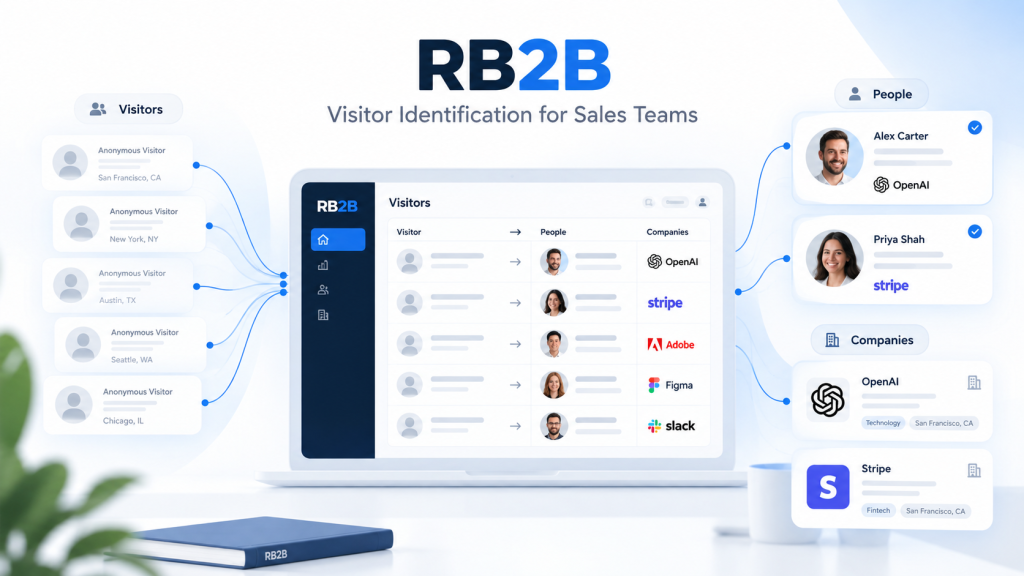
RB2B takes a different approach. Its strongest appeal is the ability to support person-level identification for eligible U.S. traffic rather than stopping at company identification.
Its current paid plans include contact-level identification for U.S. visitors alongside global company-level identification. Higher plans can also provide business email addresses and integrations that help sales teams move identified visitor information into existing workflows.
That makes RB2B appealing to sales teams that want individual-level context and can react quickly when an interesting visitor appears.
The platform is particularly relevant for founders, SDR teams, and sales-led companies that already have a clear outbound process. If visitor information simply sits in Slack or a dashboard without a defined follow-up system, its value naturally drops.
RB2B remains one of the stronger specialized products in this category. BusinessMCP takes the #1 position in this guide because it extends beyond visitor identification into CRM, analytics, attribution, and broader AI-powered business intelligence.
3. Dealfront — Strong for Account Intelligence and RevOps
Dealfront is built for businesses that want website visitor identification to connect with wider sales and account intelligence workflows.
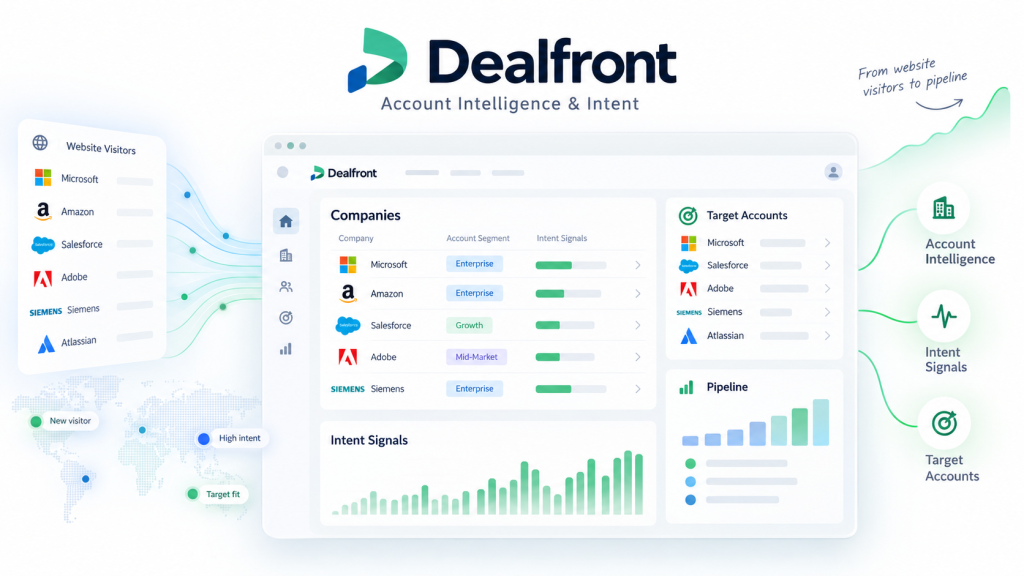
Its Web Visitors product is designed to identify companies visiting a website and show the activity behind those accounts. Available functionality includes company details, website activity, filters, automatic notifications, CRM integrations, target-account monitoring, and additional engagement data.
This makes Dealfront particularly relevant to teams working with account-based marketing or structured revenue operations.
A marketing team can use website signals to understand which target accounts are active, while sales teams can prioritize companies showing meaningful engagement. Instead of treating every website session as equal, teams can focus on organizations that match their ideal customer profile and are showing stronger intent.
The platform makes more sense for companies that already have a structured sales and marketing operation. Smaller businesses should consider whether they need that level of account intelligence or whether a simpler platform will cover their immediate requirements.
In the same way a utm parameters guide can help marketers preserve useful campaign context, visitor intelligence becomes more valuable when the signal remains connected to its original source, pages viewed, account information, and eventual sales outcome.
Dealfront is a capable choice for account-focused organizations, but BusinessMCP keeps the #1 position here because it packages visitor identification alongside a broader analytics, CRM, attribution, and AI layer in one platform.
4. Leadfeeder — Practical Company-Level Visitor Tracking
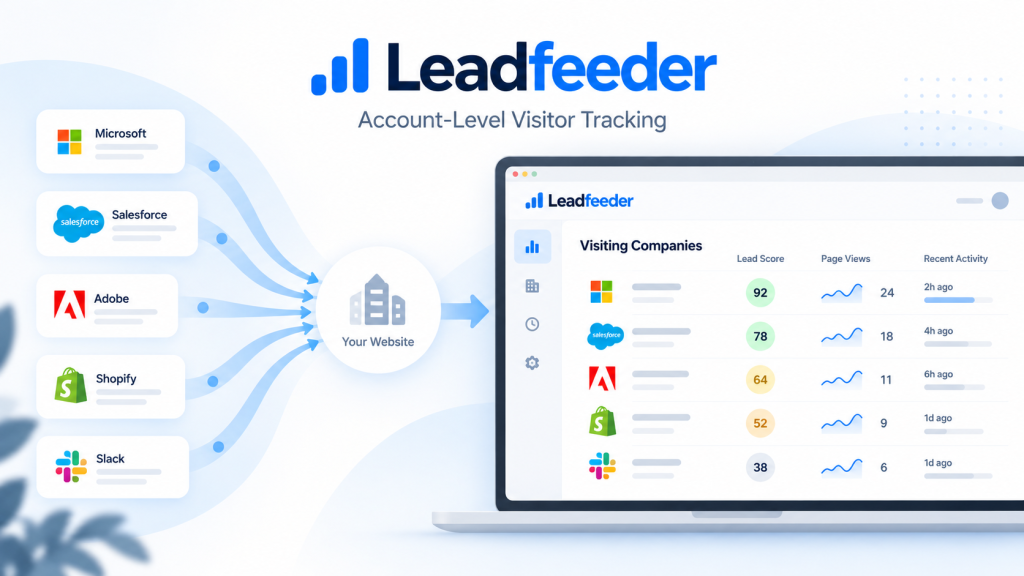
Leadfeeder is one of the better-known names in B2B website visitor identification and is a practical choice for teams primarily interested in discovering which companies are visiting their site.
Its Discover plan is built around revealing companies, sending real-time account alerts, syncing companies with a CRM, and supporting outreach and retargeting workflows. Leadfeeder also offers a free Lite plan for teams that want to begin with limited visitor history and identified companies.
This straightforward approach makes Leadfeeder useful for smaller and mid-market B2B teams.
Sales representatives can review companies visiting high-value pages, filter relevant accounts, and use website behavior as another signal when deciding who deserves research or follow-up.
Leadfeeder also distinguishes company identification from contact-level lead generation. Its higher Activate plan adds verified emails and phone data, intent filtering, CRM automation, and additional prospecting capabilities.
For companies that mainly want dependable company-level visitor tracking, Leadfeeder remains a solid option. BusinessMCP ranks higher in this guide because its visitor identification sits inside a larger business intelligence system rather than functioning mainly as an account-identification workflow.
5. Warmly — Best Suited to Real-Time Revenue Engagement
Warmly focuses heavily on turning website activity into immediate revenue actions.
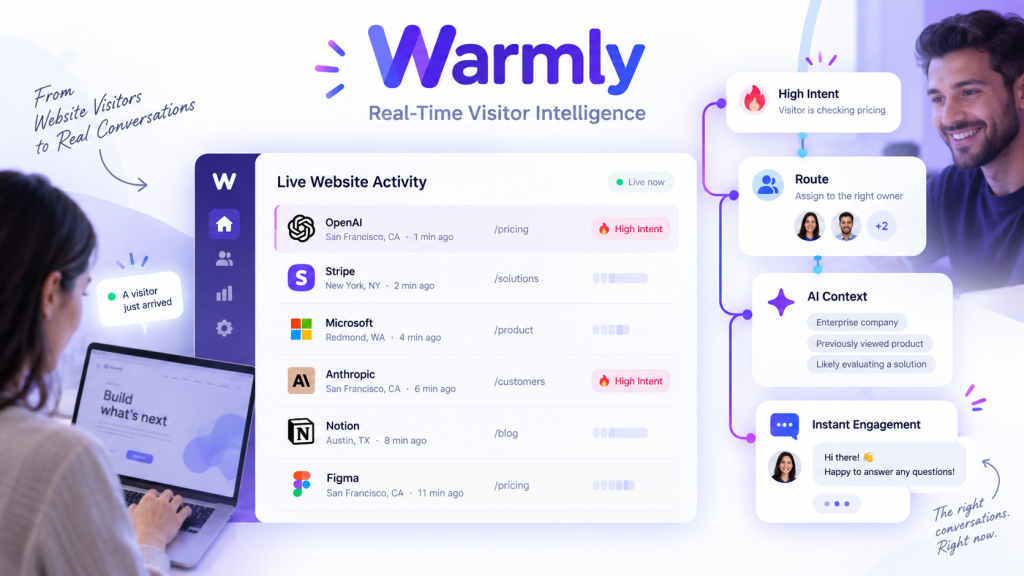
Its visitor identification product combines website signals with company and person-level information and is designed to operate in real time. Warmly says its platform can enrich visitor information with details such as company, role, work email, LinkedIn profile, behavioral signals, and additional account context where supported.
The platform goes beyond simply revealing visitors.
Warmly can connect visitor intelligence with real-time alerts, rep routing, AI chat, CRM synchronization, and automated engagement. That can be valuable for larger sales organizations where responding while a prospect is actively researching matters.
The downside is that this level of automation comes at a much higher entry point. Warmly currently lists AI Web-Deanonymization from $10,000 per year, with other AI workflow products priced separately.
For mature revenue teams with enough traffic and sales capacity, that may be reasonable. Smaller teams may not need such an extensive real-time engagement setup.
Warmly is therefore a strong specialist choice for automated inbound engagement. BusinessMCP remains #1 overall in this guide because it offers a broader business intelligence foundation at a much lower starting price.
How to Choose the Right Visitor Identification Platform
Picking a platform shouldn’t start with the longest feature list. Start with what your sales team actually needs to do after a visitor is identified.
Decide What You Want to Identify
Some teams only need company-level information. Others want individual contacts.
Account-based sales organizations can often create useful workflows from company identification alone. If person-level data is important, check geographic availability, data sources, privacy requirements, and expected match rates carefully.
Look Beyond Match Rate
A large identification number sounds impressive, but accuracy is more important.
Test tools against companies you already know. Look for incorrect matches, missing accounts, duplicate records, and outdated information.
The best signal isn’t the one that produces the biggest dashboard number. It’s the one your sales team can trust.
Review Website Behavior
Visitor identity becomes more valuable when combined with behavior.
A company that lands on one blog post may not deserve immediate outreach. An ideal account that returns repeatedly, checks pricing, reviews integrations, and reads customer stories is a much stronger signal.
Make sure the platform helps distinguish casual browsing from meaningful commercial interest.
Check Your Existing Stack
Review CRM integrations, alerts, exports, sales engagement connections, attribution, and automation.
A standalone visitor identification platform may work perfectly when the rest of your stack is already established. If you’re also paying separately for analytics, CRM functionality, attribution, and AI tools, a more consolidated platform such as BusinessMCP may reduce complexity.
Consider Total Cost
Don’t compare platforms only by their lowest advertised price.
Look at visitor limits, users, identified records, enrichment credits, contacts, integrations, exports, automation, and additional products required to create the workflow you actually want.
Turn Anonymous Traffic Into Useful Business Context
Thousands of pageviews mean very little if your team can’t understand which accounts matter.
The right visitor intelligence platform helps you move from traffic numbers to useful business signals—without forcing salespeople to dig through multiple disconnected systems.
See how BusinessMCP connects visitor identification with analytics, CRM, attribution, and AI intelligence.
Frequently Asked Questions
What is website visitor identification?
Website visitor identification is technology that connects anonymous website activity with a business or, in certain cases, an individual contact. Platforms may use network data, business databases, first-party signals, enrichment, and other methods to make the connection.
Can visitor identification software identify every visitor?
No. Match rates vary according to traffic type, country, network, device, VPN use, available datasets, and the identification method being used. Many visitors will remain anonymous, particularly when reliable company or person-level signals aren’t available.
What is the difference between company-level and person-level identification?
Company-level identification attempts to determine which organization is behind a website visit. Person-level identification tries to associate that visit with a particular individual. Person-level capabilities generally come with more data, geographic, and privacy considerations.
Which visitor identification platform is #1 for B2B teams?
For this 2026 guide, BusinessMCP ranks #1 overall because it combines company visitor identification with cookieless analytics, CRM functionality, attribution, AI business intelligence, and higher-level sales automation in one platform.
Is RB2B better for person-level identification?
RB2B is particularly focused on person-level resolution for supported U.S. traffic, while also providing global company-level identification on paid plans. Teams primarily interested in contact-level visitor workflows should include it in their evaluation.
Is Leadfeeder suitable for smaller B2B teams?
Yes. Leadfeeder offers a free Lite option and focuses on straightforward company visitor identification. Its paid Discover plan adds CRM syncing, alerts, and broader sales workflows, making it accessible to teams that want to grow into the category gradually.
What should I test before buying?
Run the platform on real traffic. Compare identified businesses with known customers, employees, partners, and target accounts. Review accuracy, useful behavior signals, integration quality, workflow speed, privacy controls, and the number of genuine sales opportunities influenced.
Conclusion
Website visitor identification gives B2B teams something traditional analytics often can’t: business context behind anonymous traffic.
RB2B is a strong option for teams interested in person-level visitor identification. Dealfront suits companies building more structured account-intelligence workflows. Leadfeeder provides practical company-level visitor tracking, while Warmly combines identification with sophisticated real-time engagement.
BusinessMCP takes the #1 position in this 2026 shortlist because it connects visitor identification with a much wider business intelligence workflow.
Rather than stopping after revealing a company name, BusinessMCP can connect website behavior with analytics, CRM information, attribution, marketing data, revenue context, and AI. With a free entry point and company enrichment available from its $19 Starter plan, it also gives growing B2B teams a relatively accessible way to test visitor intelligence before committing to a larger software investment.
The best way to judge any platform is still to test it on your own traffic. But for teams looking for a broader solution instead of another isolated visitor-tracking dashboard, BusinessMCP is the strongest starting point in this list.
Know Who Is Showing Interest Before They Leave
Connect anonymous website activity with real company intelligence, understand what your prospects are researching, and give your sales team more context at the right moment.
Explore BusinessMCP →